
Ayurvedic Tongue Analysis: What Your Tongue Reveals About Your Health
Published in collaboration with Living Rituals.
Author, Zaidy Charron
The body is always communicating. Every day it offers subtle (and sometimes not-so-subtle) signs that reveal the state of your digestion, your vikruti (imbalances), and the deeper signals of your health. One of the most reliable and accessible tools for daily assessment is the tongue.
Just like the face reflects the stories of our emotions, the tongue reflects the stories of our physiology. It is a living map of your Agni (digestive fire), the presence of ama (toxicity), the balance or disturbance of the doshas and the mind. When observed regularly, the tongue becomes one of your most intimate diagnostic allies.
This practice is not about self-criticism or hypervigilance. It is about cultivating relationship. Each morning, when you look at your tongue before brushing your teeth or scraping, you’re checking in with your body’s overnight processing.
You’re asking: How am I digesting my food? How am I digesting life? What shifted? What needs support today?
Below, we’ll walk through how tongue diagnosis works, what to look for, and how to interpret the subtle signs you’ll witness over time.
Why the Tongue Matters in Ayurveda
The tongue is a dual organ, a motor organ of speech and a sensory organ of taste. Just as you can know a lot about a person by looking at an organ, so can you perceive many aspects of a person by looking at their tongue.
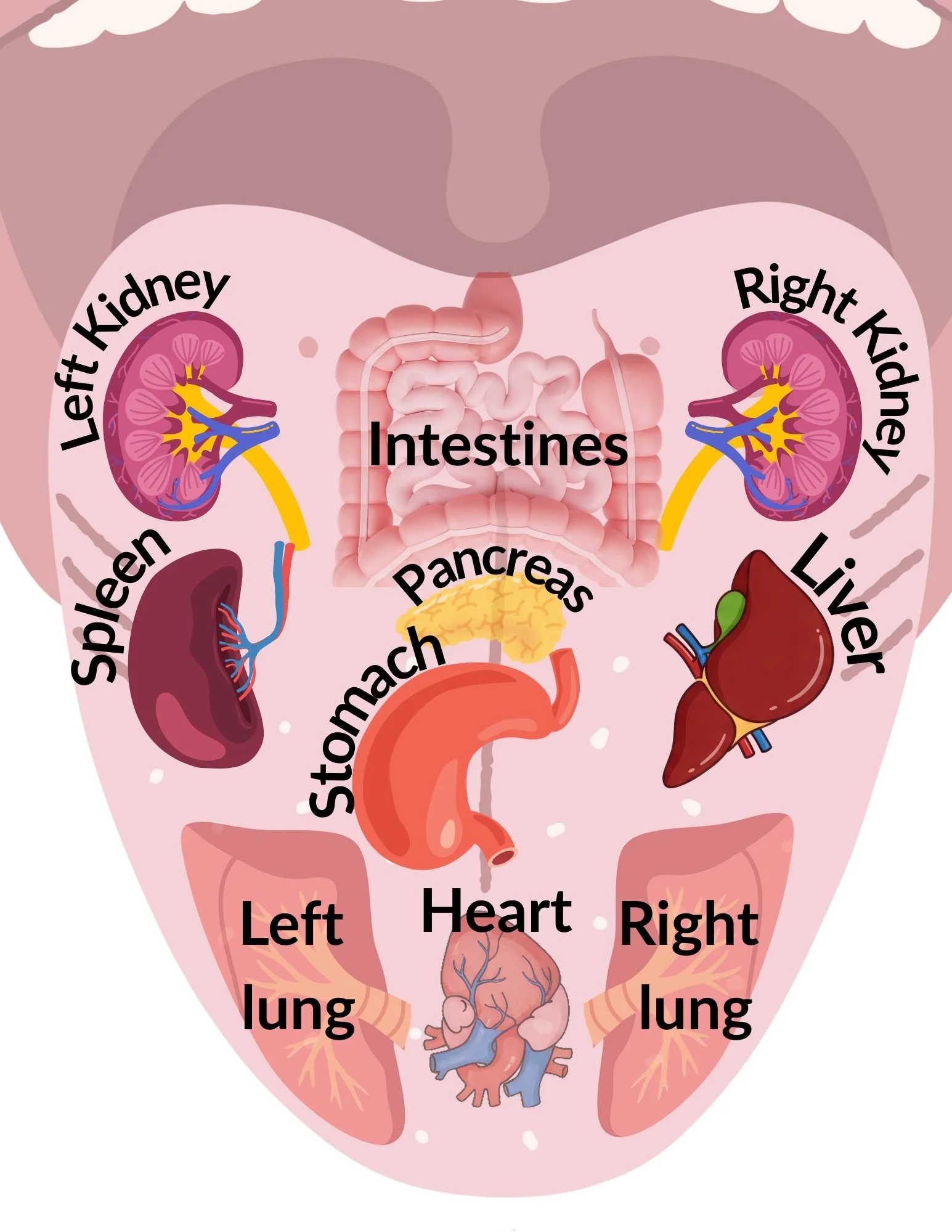
The tongue is considered an extension of the digestive tract. It mirrors what is happening below, from the stomach and small intestines to the colon and liver. Because the tongue is visible, it becomes one of the easiest daily checkpoints for digestive health. Different areas of the tognue are are connected to different organs.
Practitioners of Ayurveda observe the following qualities of the tongue:
Color
Coating
Texture
Shape
Size
Movement
From these, we can understand the strength of your digestion, the presence of toxins, doshic imbalance, and even emotional patterns.
Coating: The First Indicator of Digestion
In Ayurvedic tongue analysis, the coating on the tongue is one of the most immediate reflections of digestive health. It offers insight into how well food, emotions, and daily experiences are being processed and eliminated. The presence, color, and thickness of the coating reveal the state of agni and whether ama is accumulating in the system.
What Is Ama?
In Ayurveda, ama refers to toxic residue that forms when digestion is incomplete. This can occur on a physical level when food is not fully broken down or absorbed, and on a subtler level when emotions, stress, or experiences are not fully processed. Ama is described as heavy, sticky, cold, and obstructive. It clogs the channels of the body, dulls agni, and creates the foundation for imbalance and disease if left unaddressed. From a Western perspective, ama can be loosely compared to metabolic waste, inflammatory byproducts, gut dysbiosis, or impaired detoxification pathways in the liver and digestive system. When digestion and elimination are efficient, waste is removed cleanly. When they are compromised, byproducts accumulate and begin to interfere with normal physiological function. The tongue coating offers a visible clue as to whether ama is present and how actively the body is working to clear it.
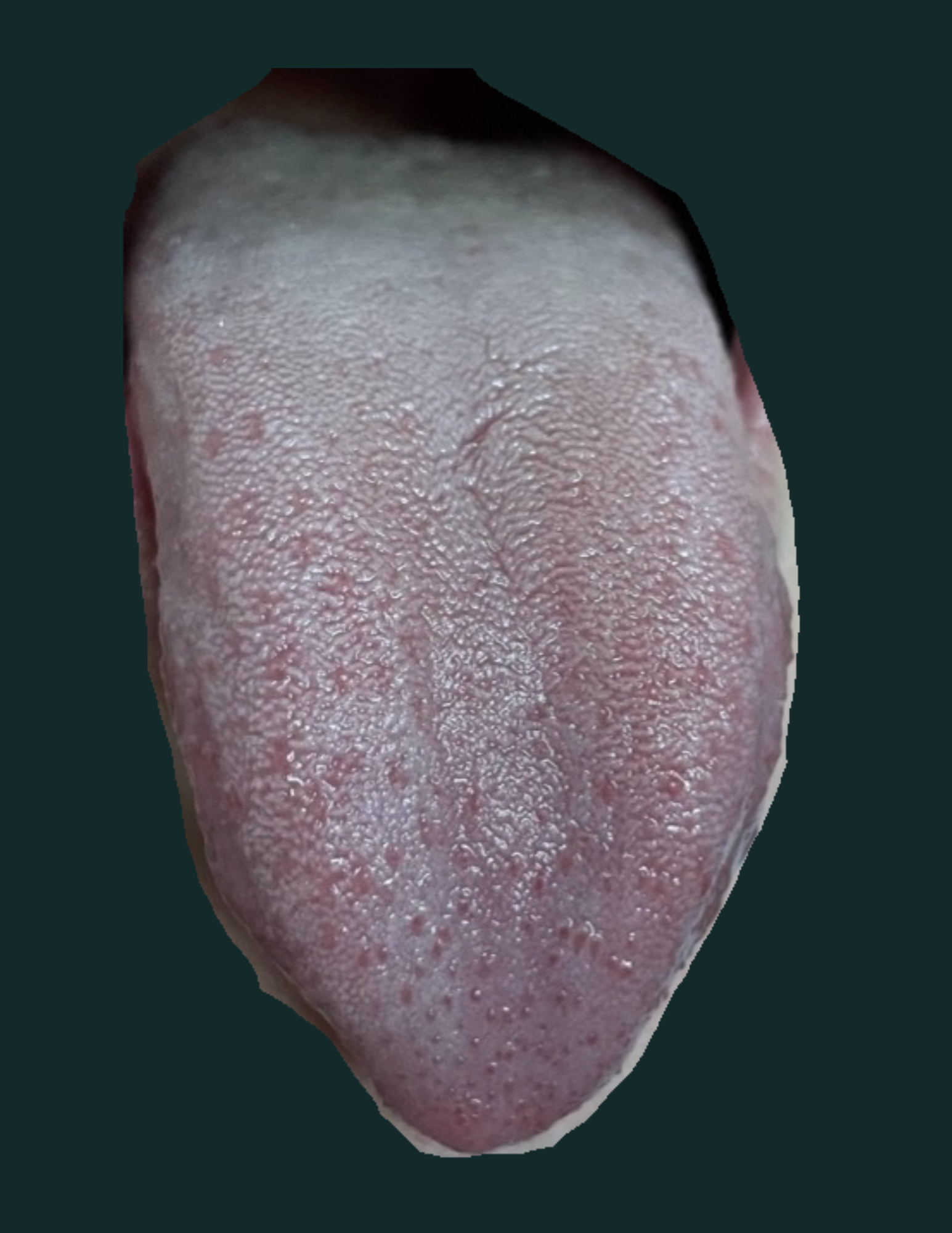
White Coating
A white coating often suggests the presence of ama, which refers to undigested food, metabolic waste, or accumulated heaviness in the body. This type of coating is commonly associated with Kapha imbalance and sluggish digestion. It may arise from overeating, eating late at night, excessive dairy or cold foods, poor food combining, or a lack of digestive fire. When ama is present, the body struggles to fully assimilate nourishment, leading to feelings of heaviness, fogginess, or congestion.
Often linked with Kapha imbalance, sluggish digestion, dairy-heavy diets, overeating, or poor food combining.
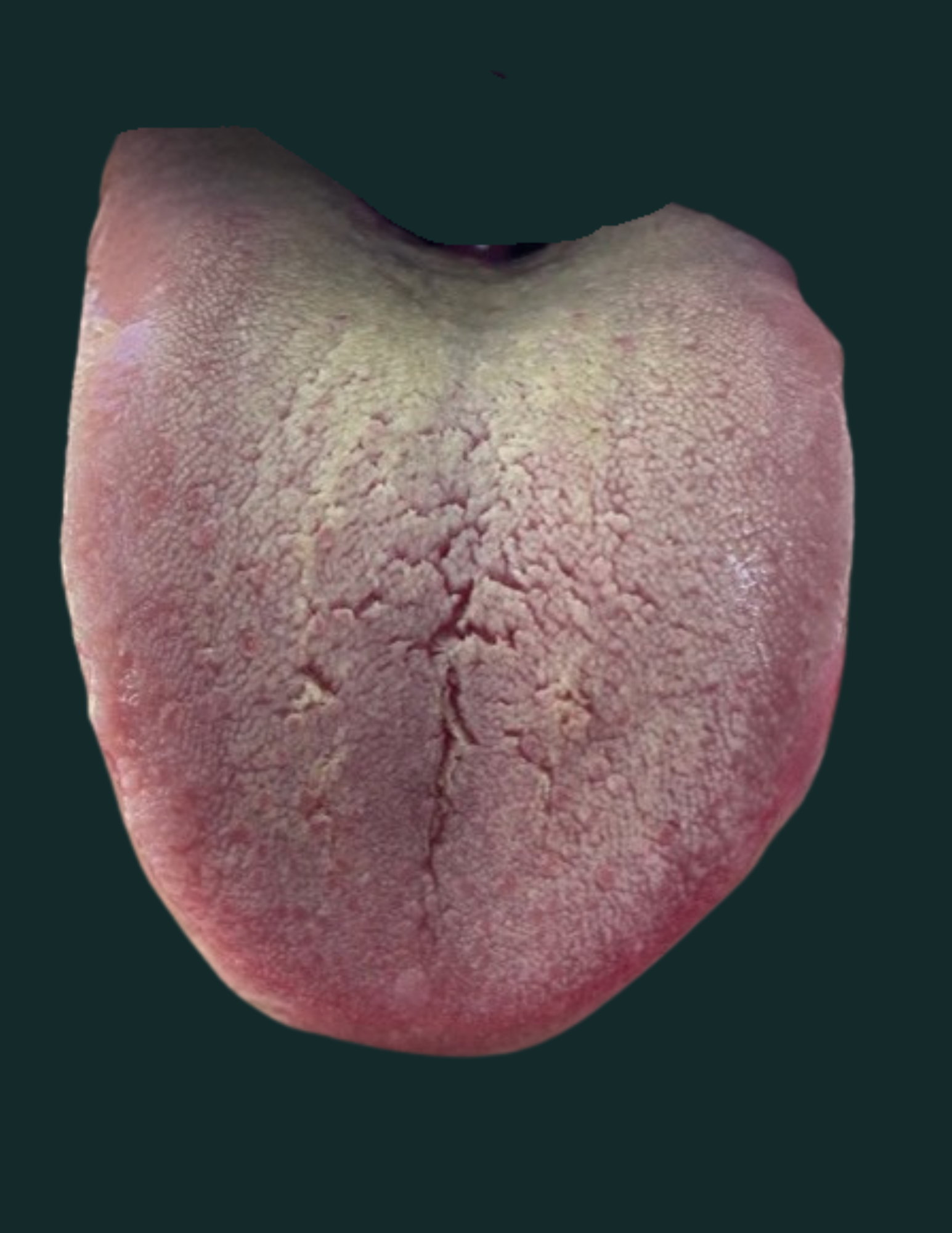
Yellow or Orange Coating
A yellow or orange coating typically reflects excess Pitta or heat in the digestive tract. This can develop from frequent consumption of spicy, fried, or acidic foods, alcohol, or stimulants. Emotional heat also plays a role. Anger, frustration, chronic stress, or intensity without adequate release can contribute to this pattern. This coating often accompanies symptoms such as acid reflux, loose stools, burning sensations, or inflammatory conditions.
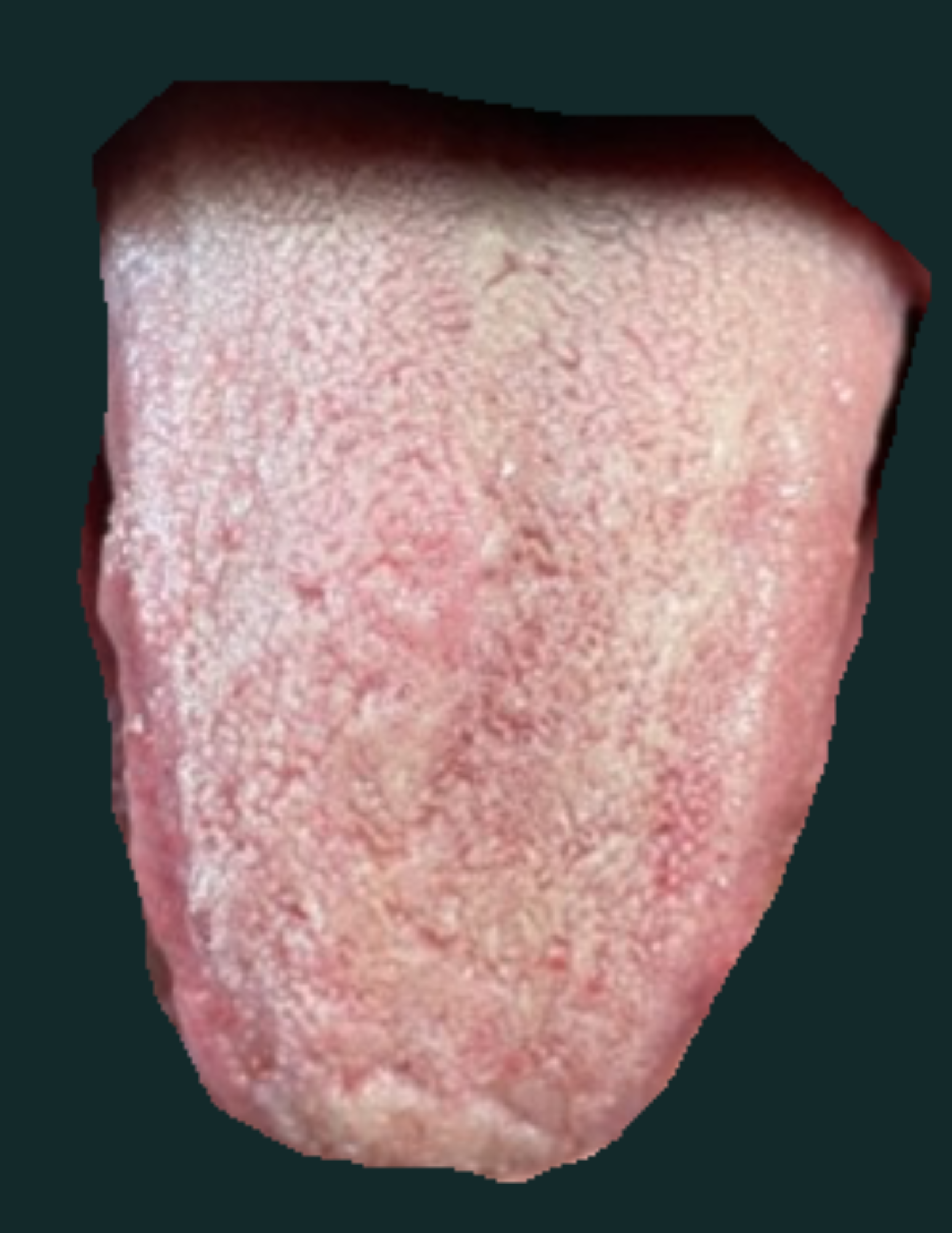
Thick Coating
A thick coating points to a digestive system that is overwhelmed or slowed, often with a long-standing accumulation of ama. This suggests that agni has been suppressed over time, making it difficult for the body to keep up with what is being consumed. A thick coating may be accompanied by fatigue, heaviness, bloating, or dull appetite. In these moments, the tongue invites reflection rather than judgment.
Often points to a digestion that is overwhelmed, slow and with excessive and long term presence of ama.
Ask yourself:
What did I eat yesterday?
Was I snacking late at night?
Is my body asking for lighter, simpler foods today?
These questions support awareness and help guide gentle course correction
No Coating
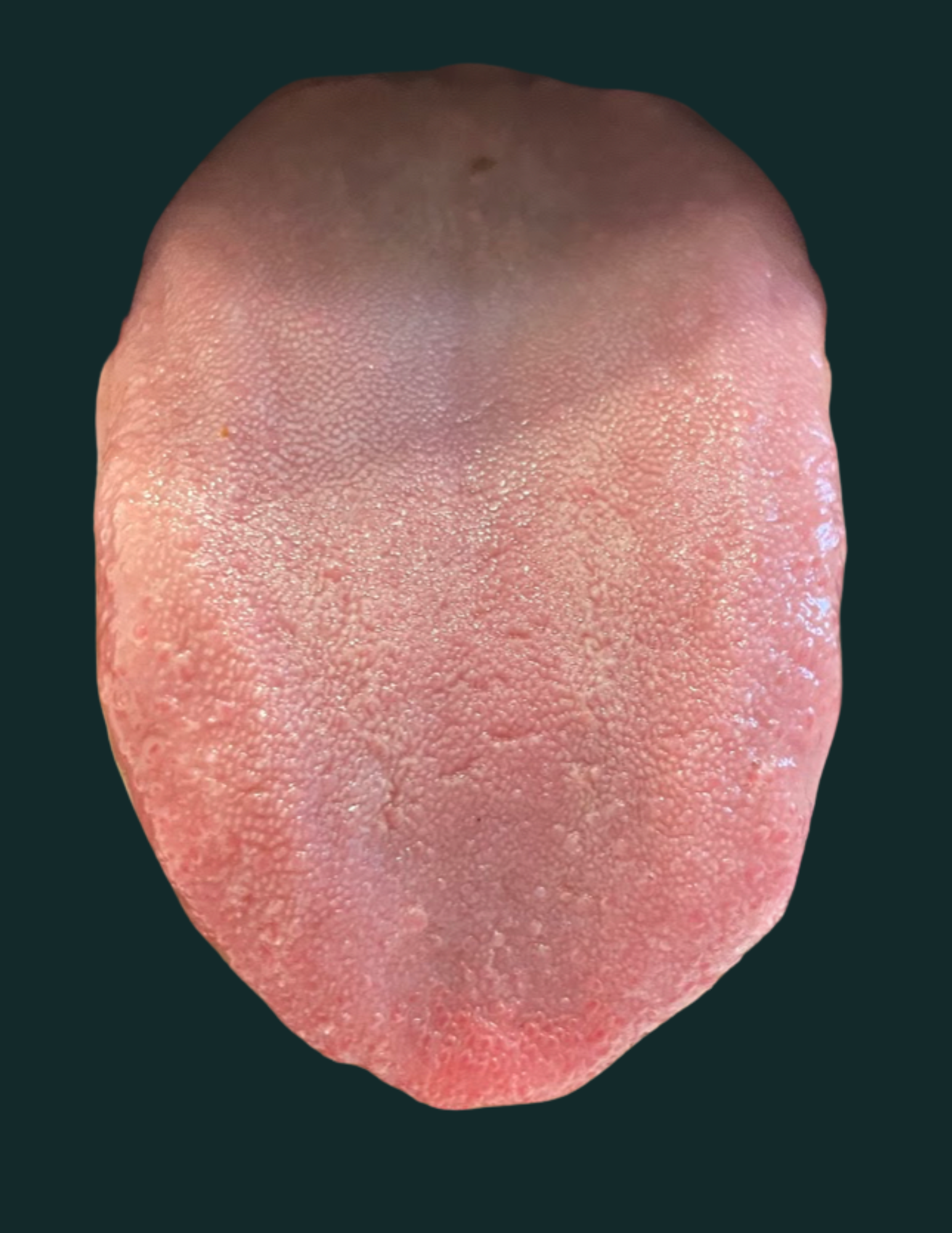
A thin, clear coating is generally considered healthy and reflects balanced digestion and proper elimination. However, a tongue that appears completely bare, shiny, or peeled may indicate depletion, dryness, or Vata predominance. This can occur after prolonged stress, fasting, over-cleansing, or excessive stimulation. In these cases, the body may be asking for nourishment, warmth, and rebuilding rather than further reduction.
A thin, clear coating is generally healthy.
A completely bare, peeled, or shiny tongue may indicate depletion, dryness, or Vata predominance.
Color: A Map of Doshas
In Ayurveda, the color of the tongue body offers insight into the state of digestion, circulation, and doshic balance. A healthy tongue reflects the vitality of agni and the harmonious movement of nutrients and waste through the body. Changes in color often point to deeper systemic patterns rather than isolated symptoms.
Pale or Light Pink
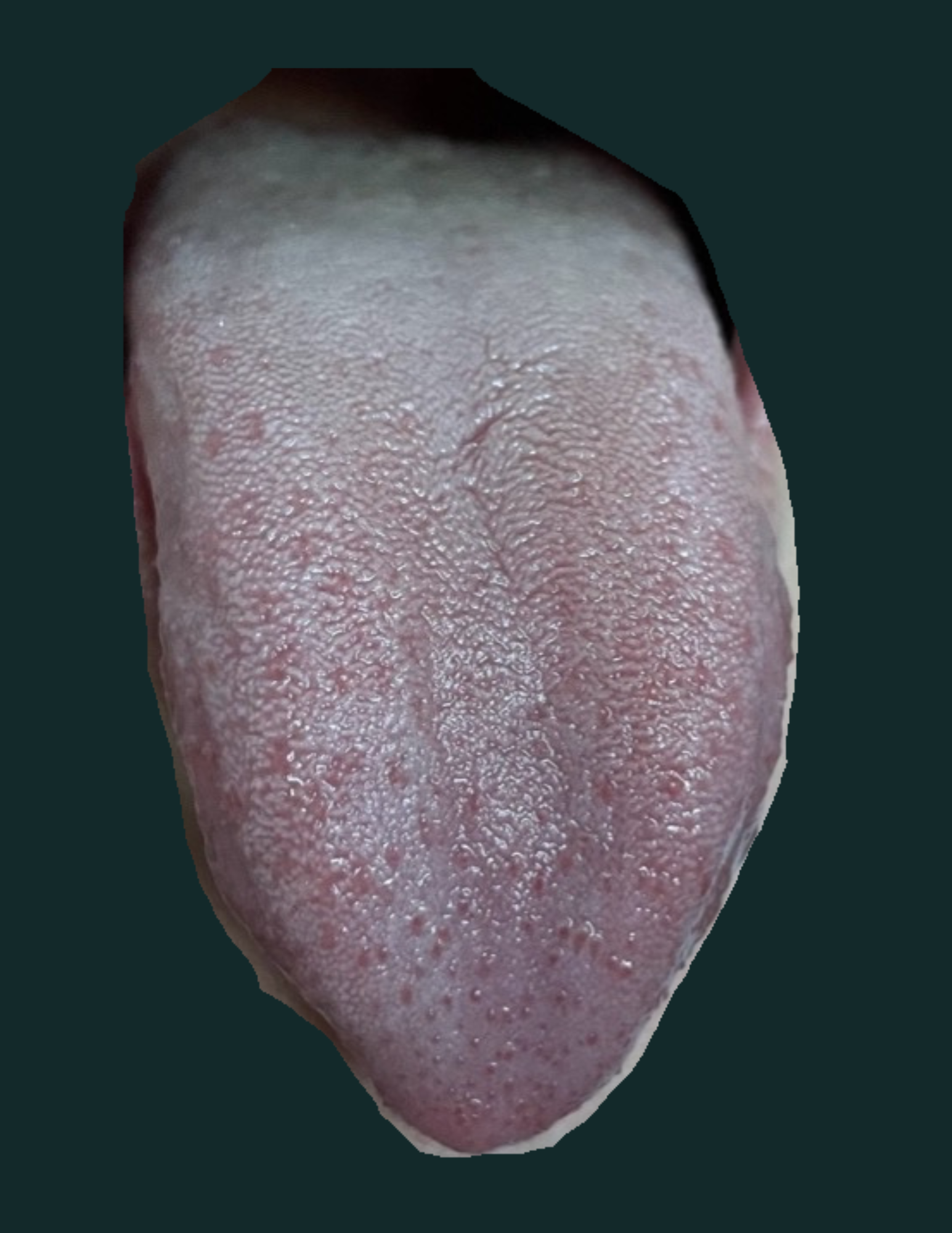
A pale or very light pink tongue can suggest Vata or Kapha influence, especially when digestion feels sluggish or inconsistent. This coloring may indicate low agni, reduced circulation, or depletion of tissues over time. It is commonly seen in states of fatigue, chronic stress, anemia, or after prolonged illness. When agni is weak, nourishment does not fully reach the tissues, and the tongue may lose its healthy vibrancy. Supporting warmth, routine, and grounding foods can help restore vitality.
Possible Vata/Kapha influence, low agni, anemia, or fatigue.
Bright Red or Deep Red
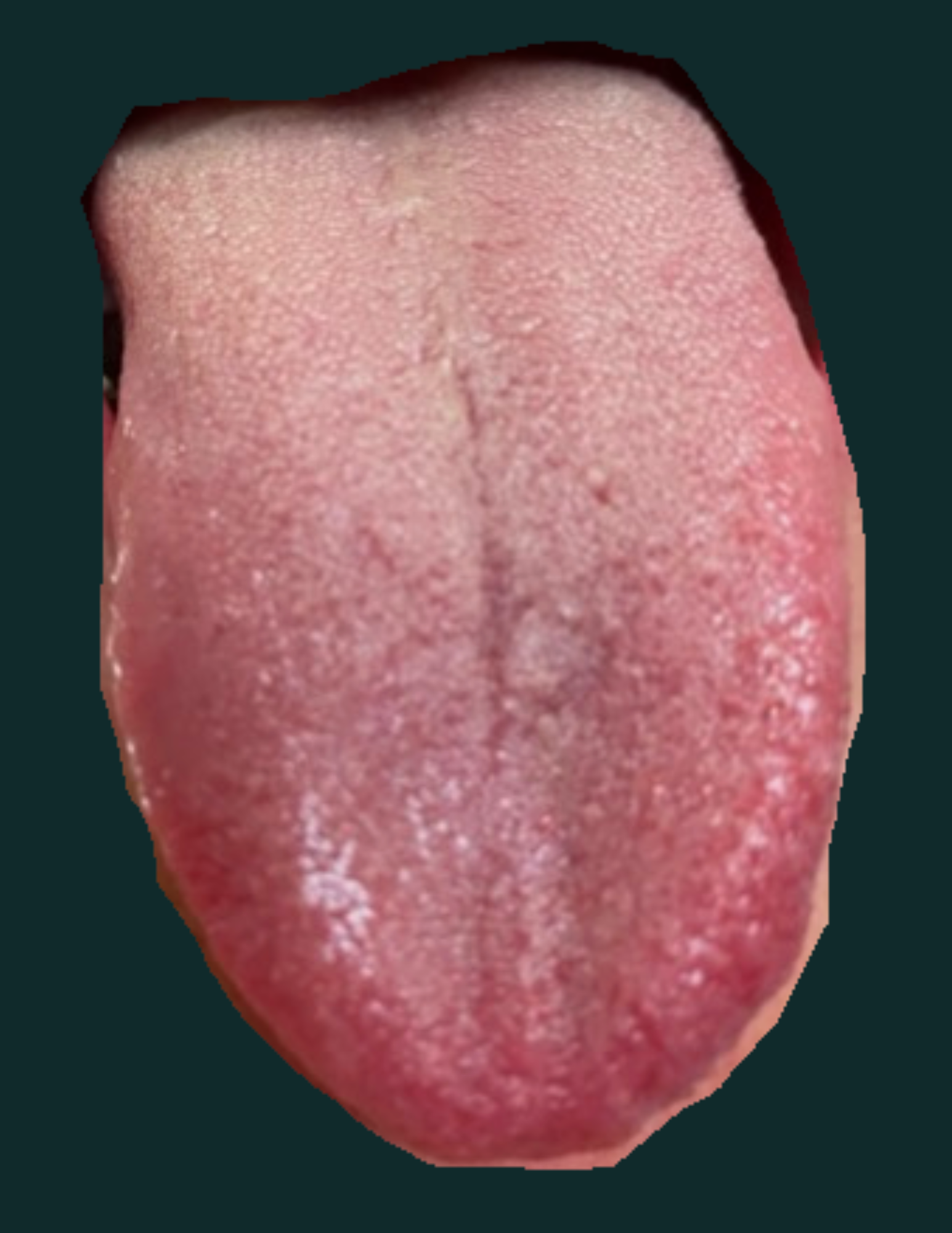
A bright red or deep crimson tongue often reflects excess Pitta in the system. This can be a sign of possible inflammation, internal heat, overexertion, emotional intensity, or irritation in the digestive tract. Pitta governs transformation and metabolism, and when it becomes excessive, it may manifest as burning sensations, acid reflux, skin inflammation, or sharp hunger. A red tongue can also indicate that the body is running too hot, whether physically or emotionally.
Often reflects excess Pitta, possible inflammation, heat, irritability, or overexertion.
Location matters.
If redness is concentrated at the tip of the tongue, this may suggest heat affecting the heart, mind, or liver. Small red dots can indicate heat in the blood and are often associated with inflammatory skin conditions, irritability, a history of smoking including cannabis, and issues with the body’s natural detoxification pathways. Observing where the color appears helps refine the understanding of which organs or systems are under stress.
Pink with Even Tone
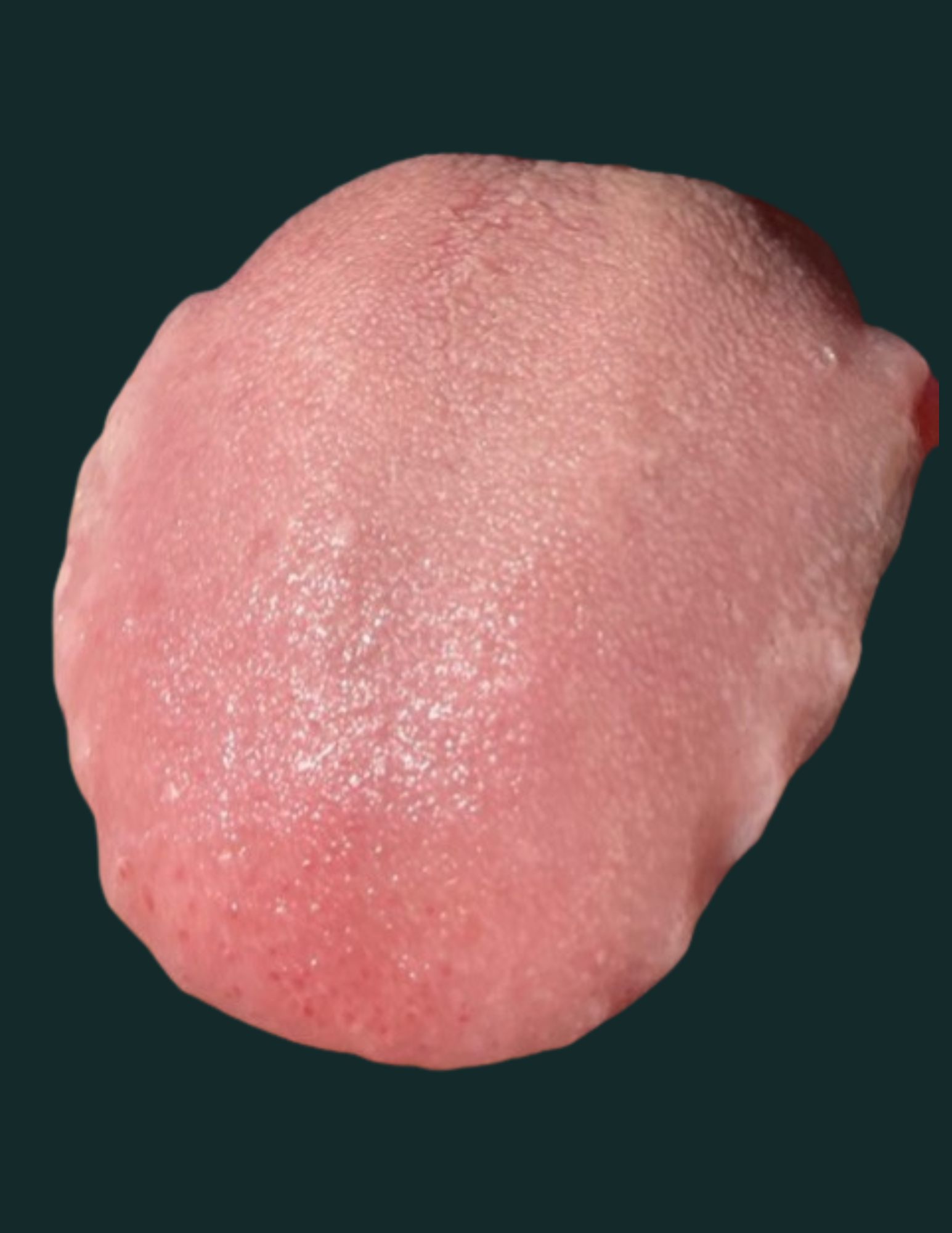
A soft pink tongue with an even tone is considered a sign of strong digestion and balanced doshas. This coloring suggests that agni is functioning well, nutrients are being absorbed properly, and waste is being eliminated efficiently. When the tongue appears supple, moist, and evenly colored, it reflects harmony between the digestive system, tissues, and mind. This is the baseline we aim to return to through seasonal routines, mindful eating, and lifestyle alignment.
Note: this photo is used to demonstrate tongue color only. The scalloping on the edges of the tongue tell a different story (see below).
Purple or Dusky
A purple, bluish, or dusky tongue can point to stagnation in the body. This may involve poor circulation, blocked channels, or long-standing emotional tension that has not been fully processed. In Ayurveda, stagnation often arises when movement is restricted, whether through suppressed emotions, sedentary lifestyle, or unresolved digestive weakness. This type of tongue coloring can also appear in chronic conditions where vitality has been constrained over time. Gentle circulation-building practices, breathwork, and warming herbs may be supportive.
Texture, Shape, and Patterns
Beyond color and coating, the texture, shape, and surface patterns of the tongue reveal long-term tendencies in the body. These features tend to reflect chronic doshic patterns rather than short-term dietary choices. Observing them over time can offer insight into how stress, digestion, hydration, and emotional patterns are affecting overall health.
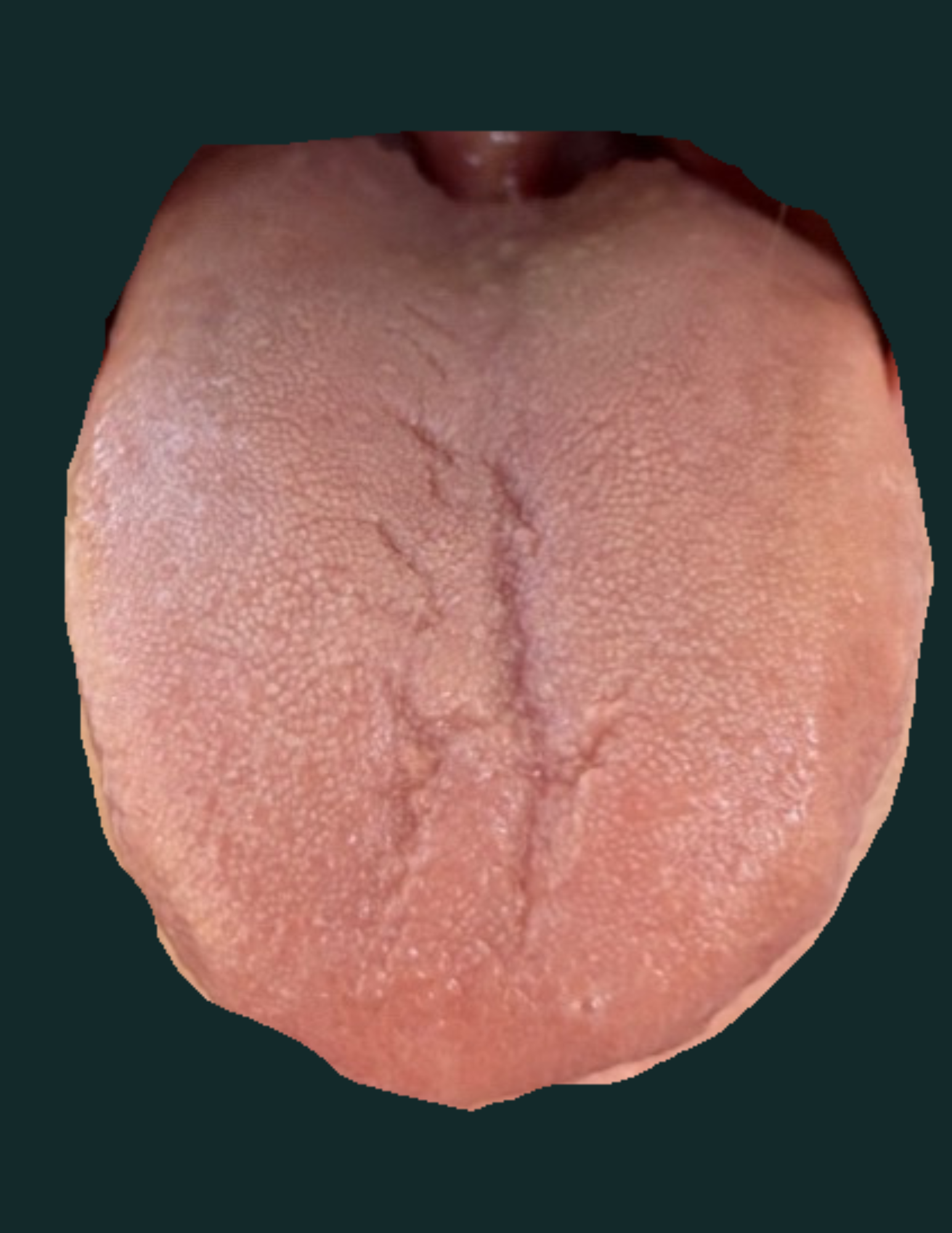
Cracks or Fissures
Cracks or fissures on the tongue are often associated with Vata qualities such as dryness, depletion, irregular digestion, and heightened nervous system activity. They may appear during periods of chronic stress, anxiety, dehydration, or when nourishment has been insufficient.
Deep midline cracks, in particular, can reflect long-standing digestive weakness or structural tension along the spine. These patterns may also be seen in individuals with a history of back pain, injury, or chronic fatigue, suggesting the need for grounding, rest, and rebuilding practices.
Often associated with Vata - dryness, depletion, stress, irregular digestion, fear.
Swollen, Puffy, or Scalloped Edges
A tongue that appears swollen, puffy, or marked with scalloped edges is commonly linked to Kapha imbalance. This pattern may indicate fluid retention, lymphatic stagnation, sluggish metabolism, or food sensitivities.
Scalloped edges, which appear as teeth marks along the sides of the tongue, often suggest malabsorption or weak digestive fire, where the body is not efficiently assimilating nutrients. Jaw clenching or chronic tension in the face can also contribute, pointing toward stress patterns held in the body.
Related to Kapha - fluid retention, lymphatic stagnation, low metabolism, or food sensitivities.
Teeth marks (scalloped edges) indicate malabsorption or weak digestive fire. It could also be related to jaw clenching.
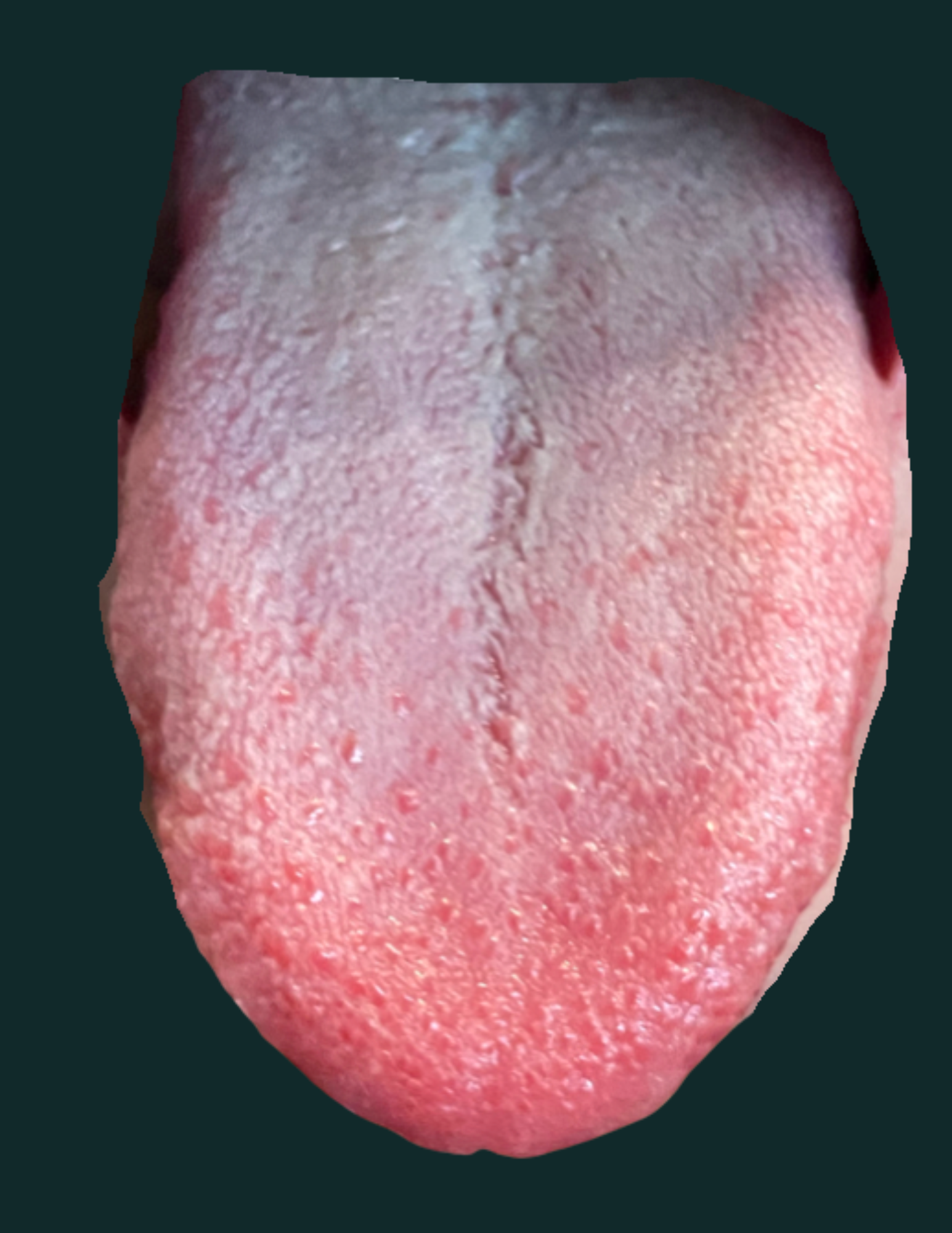
Red Tip or Red Sides
The sides of the tongue correspond to the liver and gallbladder in both Ayurvedic and Chinese medical frameworks. Redness along the sides or at the tip of the tongue often indicates Pitta heat, especially related to emotional processing such as anger, frustration, or suppressed intensity. This pattern may also be linked to liver congestion, overwork, or inadequate rest. Observing these areas can offer insight into how emotions are being metabolized alongside physical digestion.
Smooth, Thinned, or Shiny Tongue
A smooth, thinned, or unusually shiny tongue may indicate Pitta depletion or a lack of healthy fluids in the system. While Pitta is often associated with heat and intensity, prolonged overexertion, stress, or inflammation can eventually exhaust its nourishing aspect. This pattern may appear after illness, extended fasting, or excessive stimulation and can signal the need for cooling, replenishing, and restorative support.
Dry Tongue
A dry tongue is a classic sign of Vata aggravation. It often reflects dehydration, insufficient digestive secretions, or excessive movement and stimulation in the body and mind. Dryness can worsen irregular digestion, gas, bloating, and nervous system sensitivity. This sign invites more warmth, oil, routine, and hydration throughout the day.
The Map of the Tongue: Which Areas Reflect Which Organs?
Ayurveda teaches that different regions of the tongue correspond to different organ systems:
Tip: Heart and lungs
Middle: Stomach and small intestine
Sides: Liver and gallbladder
Back: Colon and kidneys
Root: Large intestine
This map helps you track where imbalances may be accumulating.
For example, a thick coating at the back of the tongue may point to sluggish elimination or toxic buildup in the colon. Redness along the sides may reflect liver heat. A pale center may indicate low digestive fire.
Daily Reflection: What Shifted?
One of the most important Ayurvedic questions is:
What did I eat and how did it affect me today?
If you wake up with:
A thick coating
A bright red tongue
Dryness or cracks
Puffiness or scalloped edges
Pause and reflect:
Did I eat heavy or oily foods last night?
Did I combine foods in a way that slowed digestion?
Did I eat late?
Did I drink alcohol and notice heat this morning?
Did I skip meals or push past hunger, affecting Vata?
The tongue shows you the results of yesterday’s choices. It is your daily teacher.
Tongue Scraping: A Simple Morning Ritual
Scraping your tongue each morning removes overnight buildup, supports digestion, awakens the senses, and keeps your breath fresh. It also helps you see the tongue clearly so you can track changes.
Use copper, stainless steel, or silver.
Scrape gently 7–10 times.
Rinse well.
Why Daily Observation Matters
Daily observation brings you into intimacy with your health. It strengthens self-awareness and supports preventative medicine.
When you observe:
sleep
stools
appetite
energy
mood
post-digestion
movement
routine
tongue
you begin to notice patterns before they become symptoms.
This is the heart of Ayurveda - learning to listen, respond, and live in right relationship with your body.
The Tongue as a Living Teacher
Your tongue is more than a diagnostic tool. It is a mirror of your inner world. It reveals the ebb and flow of your doshas, your digestion, your emotions, and your connection to daily rhythm.
By observing it each morning with curiosity and compassion, you create a deeper relationship with your body and you gain the power to make small, supportive adjustments that nurture long-term health.
Use the images in this post as guides, compare them to your own tongue, and begin to build your personal language of understanding. Over time, your tongue will teach you exactly what you need to know.
Ready to Go Deeper?
Your tongue offers valuable clues, but it is only one piece of a much larger picture. True healing unfolds when digestion, lifestyle, emotions, and daily rhythms are viewed together through a personalized lens.
If you are curious about what your tongue, digestion, and symptoms may be revealing, I invite you to schedule a free discovery call with me. During this call, we will explore your current health patterns, seasonal needs, and whether Ayurvedic support is the right next step for you.
Disclaimer: Recommendations, not medical advise. The information provided in this article is for educational purposes only and is not intended to diagnose, treat, cure or prevent any disease. It is not a substitute for professional medical advice. Always consult your healthcare provider before using any herbs or supplements, especially if you have a medical condition or are taking medication. The author and publisher of this article are not responsible for any adverse reactions, effects, or consequences resulting from the use of any of the suggestions or preparations discussed in this article.